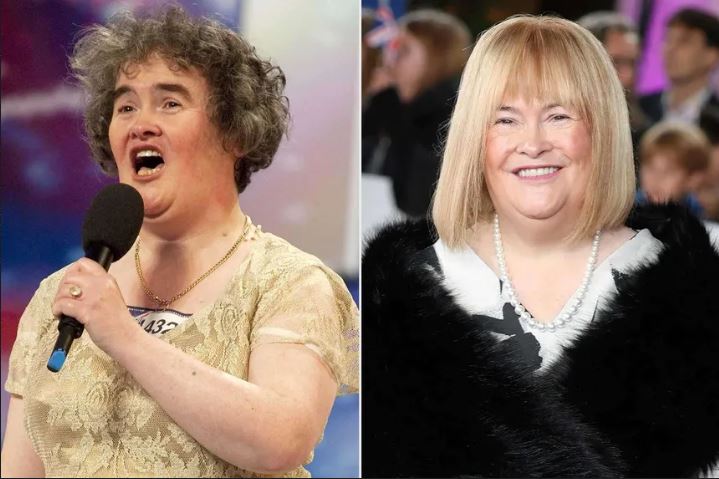
In 2009, the phrase “going viral” was still relatively new.
The concept that a single video clip could reach tens of millions of viewers within days — crossing borders, languages, and time zones without any advertising, promotion, or marketing budget — was something the industry was only beginning to understand.
Then Susan Boyle happened.
Her audition on Britain’s Got Talent was broadcast on television on April 11, 2009.
By the time most people woke up the following morning, the clip was already spreading across platforms at a rate that nobody had predicted and few people in the media industry knew quite how to explain.
Within 72 hours, it had accumulated more than 20 million views online.
Within a week, that number had more than doubled.
Media analysts who studied online sharing behavior at the time described what happened with Susan Boyle’s audition as something genuinely without precedent at that scale.
The clip was not just entertainment.
It tapped into an emotional frequency that cut across cultures, generations, and personal backgrounds in a way that very few pieces of content in the history of the medium have managed to replicate.
People were not just watching it once and moving on.
They were sending it to their parents, their colleagues, their friends in other countries, with messages that said things like “you need to see this” and “I cried at my desk watching this” and “this made my entire week.”
The structure of the clip itself was almost uniquely engineered by circumstance to produce maximum emotional impact.
The obvious underestimation at the start, the tension in the room before she sang, the explosive reversal the moment the first note landed, the crowd on its feet, the judges visibly moved — each element built on the one before it with a momentum that felt cinematic.
But none of it was staged.
That, more than anything, was what resonated most deeply with people.
In a media landscape already filling up with manufactured emotion and carefully constructed viral moments, Susan Boyle’s audition was simply real.
A real woman, a real dream, a real audience, and a real reaction — none of it scripted, none of it rehearsed, all of it completely human.
Years later, it remains among the most watched audition clips in the history of online video.
It helped launch serious conversations about the mechanics of digital sharing, the role of genuine emotion in content, and the extraordinary distance a single authentic moment can travel when it connects with something universal.
And it all started because a woman from a small Scottish village decided to step onto a stage and sing.
