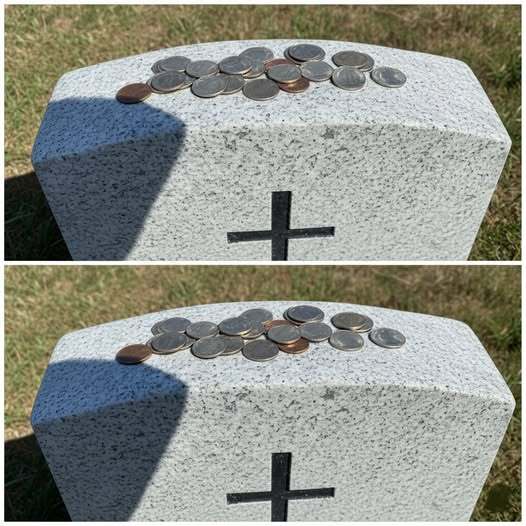

Across many cemeteries in the United States and other countries, visitors may occasionally notice small coins resting on top of military gravestones. At first glance, these coins might appear to be ordinary pieces of spare change left behind by visitors. However, for many people familiar with military traditions, these coins represent something far more meaningful.
The practice of placing coins on the graves of fallen service members has become a quiet but powerful symbol of remembrance, respect, and solidarity. Although the coins themselves may seem small or simple, the gesture behind them carries emotional weight and historical significance. Each coin placed on a gravestone can serve as a message—sometimes subtle, sometimes deeply personal—connecting visitors, fellow service members, and families of those who served.
This tradition has developed over time and is widely recognized in military communities. For those who encounter it for the first time, understanding the meaning behind the coins can provide insight into the ways people honor individuals who dedicated their lives to service.
In this article, we will explore the history of the tradition, the symbolic meaning behind different coins, how the practice evolved over time, and why this small gesture continues to hold such powerful significance for families, veterans, and visitors today.
Honoring Those Who Served
Military cemeteries are places of reflection, remembrance, and gratitude. For many families, these resting places represent both personal loss and pride in the service of their loved ones. Visitors often leave flowers, flags, or small tokens to express appreciation and respect.
Among these gestures, coins have become a particularly unique symbol. Unlike larger memorial items, coins are small and simple, yet they carry a message that can be understood by those familiar with the tradition.
The act of leaving a coin communicates that someone has taken the time to visit and remember the individual buried there. In some cases, it may indicate a personal connection, shared experience, or mutual respect among members of the military community.
Because coins are modest and widely available, the gesture remains accessible to anyone who wishes to pay their respects.
Historical Roots of Memorial Traditions
The idea of leaving objects at graves is not unique to military culture. Throughout history, people around the world have placed small items on graves as symbols of remembrance.
In ancient cultures, coins were sometimes placed with the deceased as part of burial rituals. In classical Greek mythology, for example, coins were believed to help guide souls into the afterlife. While modern military traditions are not directly connected to these ancient beliefs, they share the idea that small objects can carry symbolic meaning.
Over time, many cultures developed their own ways of honoring the departed. Flowers, candles, and personal items often serve as visual reminders that someone has visited and remembered the individual who has passed away.
The tradition of placing coins on military graves follows a similar pattern—using a small object to convey a message of remembrance.
Development of the Modern Military Coin Tradition
The modern form of this tradition became especially visible during the period surrounding the Vietnam War. At that time, the United States was experiencing intense public debate about the conflict. For many returning service members and families of those who died in service, discussing the war publicly could be complicated or emotionally difficult.
As a result, some veterans began leaving coins at the graves of fellow service members as a discreet way to show respect and solidarity. The act allowed individuals to express remembrance without engaging in political discussions or public statements.
Over time, this simple gesture gained recognition within military communities. What began as a quiet symbol among veterans gradually spread into a broader practice observed in cemeteries across the country.
Today, the tradition continues as a way to acknowledge the bonds formed during military service and to honor those who are no longer present.
Understanding the Meaning of Different Coins
One of the most distinctive aspects of this tradition is that different coins can represent different messages. While the exact interpretations may vary slightly depending on location or community, several widely recognized meanings have become associated with specific coins.
The Penny
A penny placed on a gravestone generally indicates that someone visited the site. It is the most basic and widely used coin in this tradition.
For families visiting the grave later, seeing a penny can provide comfort. It serves as a simple confirmation that another person stopped by to pay their respects.
The message conveyed by a penny is straightforward: someone remembered.
The Nickel
A nickel often carries a slightly deeper meaning. In many interpretations, leaving a nickel indicates that the visitor and the deceased attended training together, such as boot camp.
Military training is an intense experience that creates strong bonds among those who participate. Leaving a nickel acknowledges that shared experience and the connection formed during those early days of service.
For families, discovering a nickel can suggest that a fellow trainee or close peer stopped by to honor their loved one.
The Dime
A dime is commonly interpreted to mean that the visitor served alongside the deceased in the military.
This connection may include time spent in the same unit, deployment in the same location, or participation in shared missions. Because military service often involves teamwork and mutual reliance, these relationships can be very meaningful.
When families find a dime on a gravestone, it may indicate that someone who served directly with their loved one took the time to visit and remember them.
The Quarter
A quarter traditionally holds one of the most significant meanings within this custom. It is often understood to represent that the visitor was present when the service member passed away or was there during the circumstances surrounding their death.
This interpretation reflects a deeply personal connection. Individuals who leave quarters may have shared the most difficult moments of service alongside the person being remembered.
For families, the presence of a quarter can carry powerful emotional significance, suggesting that someone who witnessed those events continues to honor the memory of their fallen companion.
A Gesture of Quiet Communication
One of the most remarkable aspects of this tradition is how it allows people to communicate without words. A small coin left on a gravestone may appear insignificant to someone unfamiliar with the custom, but to those who understand its meaning, the message can be profound.
This silent communication reflects the unique culture of military service, where shared experiences often create strong bonds among individuals. Even many years after service members have left active duty, these connections can remain deeply meaningful.
By leaving a coin, visitors acknowledge those bonds and recognize the sacrifices made by their fellow service members.
Comfort for Families
For families visiting military graves, finding coins left by others can provide reassurance that their loved one has not been forgotten.
Grief can be a long and complex journey, and knowing that others continue to remember the individual can offer a sense of comfort. Each coin becomes a small reminder that the person’s service and life are still valued by others.
Some families choose to leave the coins in place as part of the memorial. Others collect them as keepsakes or donate them to organizations that support veterans and military families.
Regardless of how they are handled, the coins often carry emotional meaning far beyond their monetary value.
Coins and Military Community Traditions
The coin tradition is also connected to another practice within military culture known as “challenge coins.” These coins are often distributed within units to recognize service, achievements, or membership.
While challenge coins are usually larger and specially designed, they share the same spirit of camaraderie and recognition that is reflected in the grave coin tradition.
Both customs highlight the strong sense of community that often develops among members of the armed forces.
The Role of Military Cemeteries
Military cemeteries serve as places of reflection for visitors from many different backgrounds. Some visitors come to honor family members, while others visit to express gratitude for those who served.
In places like Arlington National Cemetery, visitors may occasionally notice coins resting on gravestones throughout the grounds. These small tokens quietly demonstrate how many individuals continue to pay tribute to those who served.
Cemetery staff often collect the coins periodically. In some cases, the collected coins are used to support maintenance efforts or donated to charitable organizations that assist veterans.
A Tradition That Continues Today
Despite its simple nature, the coin tradition remains meaningful to many people. It does not require elaborate preparation or large gestures—only the intention to remember and honor someone who served.
Visitors who learn about the tradition often choose to participate when they visit military cemeteries. By leaving a coin, they become part of a long-standing practice of remembrance.
The continued presence of coins on gravestones demonstrates that the tradition still resonates with many individuals across generations.
Respectful Ways to Participate
For those who wish to participate in the tradition, the most important consideration is respect. Visitors should follow cemetery guidelines and ensure that any items left at gravesites are appropriate and permitted.
Placing a coin gently on a gravestone can be a quiet way to acknowledge the life and service of the individual buried there. It does not require a personal connection; sometimes the gesture simply reflects appreciation for the sacrifices made by members of the armed forces.
Why Small Gestures Matter
In a world often focused on large ceremonies and public recognition, the coin tradition demonstrates how small gestures can carry deep meaning.
A single coin may cost very little, but the act of leaving it represents time, thought, and respect. It shows that someone paused during their visit to remember a life and acknowledge the individual’s service.
For families, veterans, and visitors alike, this tradition reinforces the idea that remembrance can take many forms.
The Enduring Meaning of the Tradition
Over time, customs evolve and adapt, but the underlying purpose often remains the same. The tradition of placing coins on military graves continues because it fulfills a universal human need: the desire to remember and honor those who came before us.
Whether placed by a fellow veteran, a family member, or a visitor who simply wishes to show gratitude, each coin contributes to a quiet but powerful message.
Together, these small tokens create a collective expression of remembrance—one that reflects shared history, respect, and appreciation for those who served.
A Symbol of Memory and Gratitude
Ultimately, the coins left on military gravestones represent more than currency. They symbolize remembrance, connection, and gratitude.
For some visitors, the gesture may reflect personal memories of service alongside the individual being honored. For others, it is simply a way to acknowledge the sacrifices made by members of the military.
Either way, the tradition continues to serve as a meaningful expression of respect.
In a world where acts of remembrance can sometimes feel distant or abstract, the simple placement of a coin provides a tangible reminder that every life and every story matters.
And long after the visitor has left the cemetery, that small coin remains behind—quietly telling a story of honor, remembrance, and enduring respect.