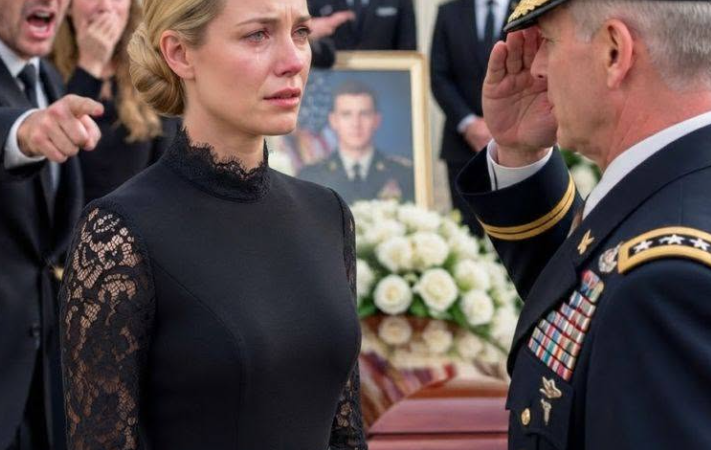
“Ten Years After My Family Cut Me Off for Becoming an Army Doctor, I Returned for My Grandfather’s Funeral. My Father Glanced at My Uniform and Mocked, “Still Fixing Scrapes for a Living?” Before I Could Respond, a Senior Pentagon Official Crossed the Room, Saluted Me, and Said, “It’s an Honour to See You Again, Colonel Vance.” My Father Fell Completely Silent.
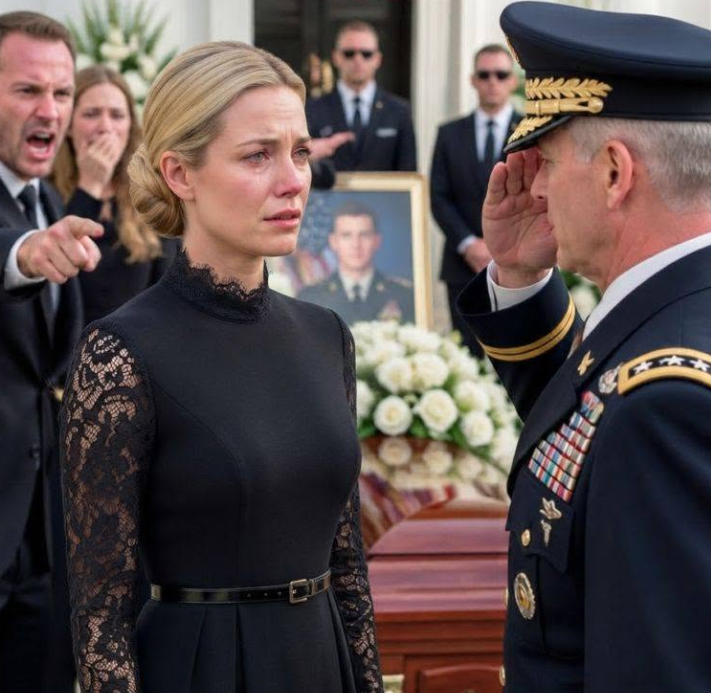
Part 1: The Funeral Salute
The first thing my father said to me at my grandfather’s funeral was:
“So, you’re still pretending the Army needs another doctor?”
He made no effort to lower his voice.
Arthur Vance had never believed in insulting someone privately when a room full of influential people was available to listen.
He spoke loudly enough for everyone gathered inside the reception hall of the Army Navy Country Club to hear him.
Retired generals.
Defence executives.
Lobbyists.
Politicians.
My grandfather, General Marcus Vance, had been buried less than an hour earlier.
I stood in front of my father wearing my full dress uniform, my gloves tucked beneath one arm while the rain slowly dried across my shoulders.
“Hello, Dad,” I said evenly.
His gaze travelled over my service ribbons and Medical Corps insignia before the familiar, dismissive smile appeared on his face.
“So the family doctor has finally returned,” he said.
“Should everyone form a queue for free aspirin?”
A defence contractor nearby laughed.
My younger brother, Julian, immediately joined him.
He lifted his whiskey glass and grinned.
“Clarissa, I didn’t realise Army doctors were permitted to leave the base.”
“They are,” I replied.
“For funerals.”
His grin weakened slightly.
It was a small victory.
But I had learned long ago not to waste those.
The reception looked exactly like every Vance family gathering I remembered.
Crystal chandeliers.
Perfect floral arrangements.
Tailored suits.
Quiet business negotiations disguised as mourning.
My stepmother, Victoria, moved gracefully through the crowd, carefully avoiding my eyes whenever she passed.
I reminded myself why I had returned.
Not for Arthur.
Not for Julian.
Not for Victoria.
I had come only to honour my grandfather.
Then the entire room changed.
Conversations softened.
Men straightened their jackets.
A senator near the bar adjusted his posture.
Someone important had entered.
I turned toward the doorway.
Deputy Assistant Secretary of Defense Harrison Reed stood at the entrance with three federal security agents behind him.
My father saw him at the same moment.
For the first time that afternoon, Arthur Vance’s smile disappeared.
Reed surveyed the room.
His gaze passed over my father.
Then my brother.
Then the circle of contractors surrounding them.
Finally, his eyes settled on me.
Without hesitation, he walked across the reception hall.
He did not approach Arthur.
He came directly toward me.
When he reached me, he stopped, stood at attention, and raised his hand in a precise military salute.
Training took over.
I returned it before my mind had time to process what was happening.
“Colonel Vance,” Reed said.
“It is an honour to see you again.”
Behind me, Julian’s whiskey glass stopped halfway to his mouth.
Reed lowered his voice, though several nearby guests could still hear him clearly.
“The soldiers from Kandahar still talk about what you did for them.”
Silence spread across the room.
My father looked at my uniform again.
Only this time, his expression had changed.
It was as though he were finally seeing more than ribbons, fabric, and an occupation he considered beneath the family name.
Reed extended his hand.
“I came to pay my respects to your grandfather,” he said. “He spoke about you several times near the end.”
Those words hurt more deeply than anything my father had said.
My grandfather and I had barely spoken in years.
Not long afterward, Arthur found me standing near the hallway.
“How do you know Harrison Reed?” he demanded.
I looked at him and realised that, for once, I no longer felt like the frightened sixteen-year-old who had spent years trying to earn his approval.
“You meet certain people,” I said quietly, “on the worst day of their lives.”
Then I turned and walked outside into the cold rain.
I had barely reached the wet stone steps when footsteps approached from behind.
Reed emerged carrying two paper cups of coffee.
He handed one to me.
Then he opened his other hand.
My grandfather’s old silver lighter rested in his palm.
“He wanted you to have this,” Reed said softly.
My fingers trembled as I took it.
A folded piece of paper had been secured beneath the lighter with a faded strip of tape.
My name was written across the front in my grandfather’s handwriting.
Clarissa.
At that moment, I understood that my grandfather’s funeral was not the conclusion of his story.
It was the beginning of something he had spent years preparing for me to discover.

The story is too long to post in the caption, so just say you “”Yes””. The full story will be in the comments below.
